Managing Pet Odor on Artificial Turf: What Actually Works
By Elite Turf Refresh Team
Pet odor on artificial turf is the number one concern we hear from dog owners across the Denver metro area. If you are dealing with a turf that smells fine in winter but becomes unbearable in July, you are not alone — and the problem is solvable with the right approach and realistic expectations.
Why Pet Odor Develops on Artificial Turf
When your dog uses artificial turf, liquid waste passes through the fibers and into the infill layer. Some drains through to the base and away. But some clings to infill particles and fiber bases, especially in areas with slower drainage or compacted infill. Over time, bacteria colonize this residue and break it down, producing ammonia and sulfur compounds — the sharp, unpleasant smell you notice.
The odor you smell is not the waste itself. It is the byproduct of bacterial activity feeding on trapped organic matter. That distinction matters because it explains why simply rinsing the surface does not solve the problem once buildup is established.
Factors That Make Odor Worse in Colorado
- Altitude and UV intensity: Colorado's intense sun heats turf surfaces well above air temperature, amplifying odors dramatically in summer
- Low humidity: Dry conditions mean less natural flushing from rain compared to coastal climates
- Compacted infill: Freeze-thaw cycles compact infill over winter, trapping more residue come spring
- Small pet areas: Concentrated waste in a limited zone overwhelms drainage capacity
- Infrequent rinsing: Allowing buildup to compound week over week makes the problem exponentially harder to address
What Works for Prevention
Prompt waste removal and daily rinsing of pet zones are the best preventive measures — especially during warm months along the Front Range. Enzyme-based turf cleaners applied weekly break down organic matter between professional visits. These are available at most home improvement stores and are safe for pets when used as directed.
Keeping infill levels adequate also helps. Low infill means waste residue sits closer to fiber bases where it is harder to flush. If you notice infill levels dropping in pet areas, blooming and de-compacting service can redistribute and replenish what has shifted.
What Professional Treatment Can Achieve
Our disinfect and deodorize service addresses buildup that DIY methods cannot reach. We apply antimicrobial treatments that penetrate through the infill layer, targeting the bacteria and organic residue producing the odor at its source — not just masking it on the surface.
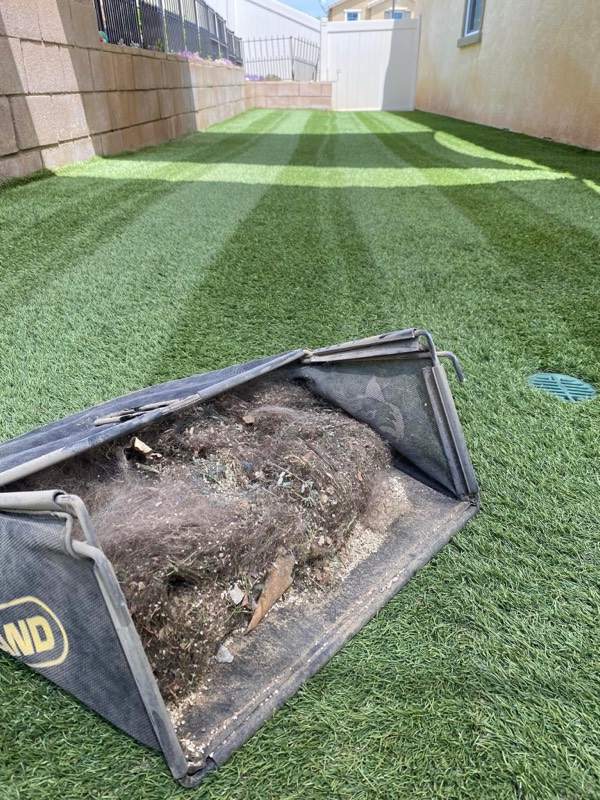
Combined with pet hair and debris removal, this process extracts embedded organic matter and treats the remaining infill to significantly reduce bacterial activity.
What We Will Not Promise
We will not guarantee complete odor elimination. Every turf system is different — infill type, drainage quality, turf age, base material, and the extent of buildup all affect results. Some systems respond dramatically, going from noticeably unpleasant to essentially odor-free. Others show major improvement but may retain trace odor in the hottest weather.
We give honest assessments before starting work. If your situation is beyond what treatment alone can fix, we will tell you that upfront rather than take your money for a result that will not satisfy you.
Long-Term Odor Management Strategy
For homes with heavy pet use, odor management is ongoing — not a one-time fix. The most effective approach combines three layers:
- Daily: Waste pickup and targeted rinsing of pet zones
- Weekly: Enzyme-based cleaner application to high-use areas
- Quarterly or seasonal: Professional disinfect and deodorize treatment
The frequency of professional treatment depends on your specific situation — number of dogs, size of the turf area, drainage quality, and Colorado's seasonal temperature swings.
When Infill Replacement Is the Right Call
In severe cases where infill has been deeply saturated after years of heavy pet use with minimal maintenance, partial infill replacement in the pet zone may be the most cost-effective path forward. We can assess whether your situation warrants this approach and walk you through the options honestly.
Ready to tackle pet odor on your artificial turf?
Elite Turf Refresh serves 40+ communities across the Denver metro area. Get your free quote or call (720) 450-1653 today.