Putting Green Infill Types: What Is in Your Green
By Elite Turf Refresh Team
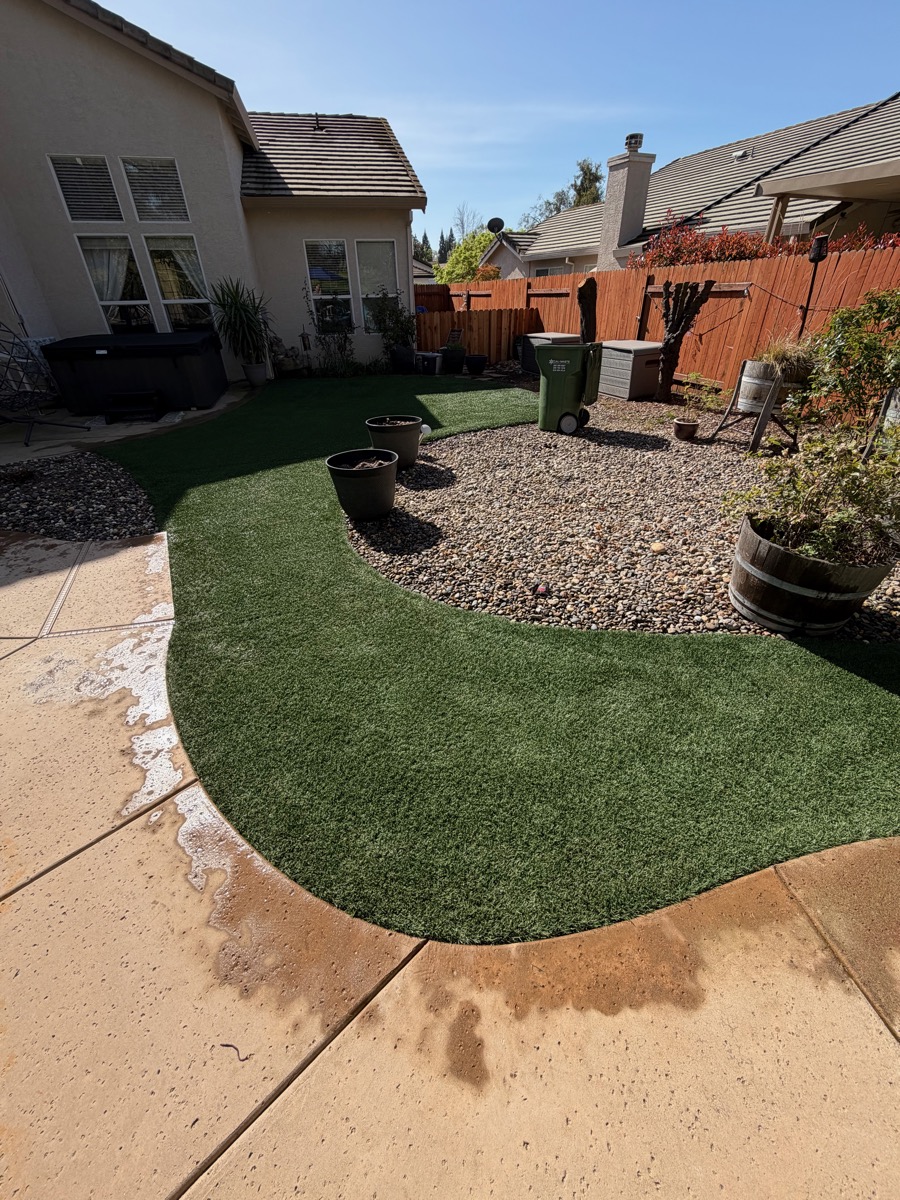
The infill in your putting green is not just filler material. It is a critical performance component that directly controls ball speed, surface consistency, drainage, and how your green feels underfoot. Most homeowners never think about infill until something goes wrong, but understanding what is in your green helps you make better maintenance decisions and communicate more effectively with service professionals.
Silica Sand Infill for Putting Greens
Silica sand is the most common infill for residential putting greens and the standard in the industry for good reason. It provides excellent weight stability, drains well, and supports consistent ball roll when properly distributed. Rounded silica sand is strongly preferred over angular sand because angular particles can abrade and damage turf fibers over time.
The primary maintenance concern with silica sand is compaction and migration. Foot traffic gradually pushes sand from high-use zones into low-traffic areas, and the sand in those high-traffic zones compacts and settles. Professional putting green refresh service decompacts and redistributes silica sand to restore uniform performance.
Crumb Rubber Infill
Some installers use crumb rubber, often mixed with sand, as a combination infill. Rubber provides cushioning and supports drainage, but on putting greens specifically it has drawbacks. Rubber granules are lighter than sand and migrate more easily, creating inconsistent surfaces faster. Rubber also absorbs and retains heat, which matters during Colorado summers when direct sun can raise surface temperatures significantly.
If your green has crumb rubber infill, it will need more frequent redistribution service to maintain consistent performance. We work with rubber-infill greens regularly and adjust our approach accordingly.
Coated Sand Products (Envirofill and Similar)
Coated sand products like Envirofill use a polymer coating on sand granules that provides antimicrobial properties and reduces dust. This is a solid option for homeowners who prioritize hygiene, particularly in households with young children who play on or near the green, or where pets have access to adjacent turf areas.
Coated sand performs similarly to standard silica sand in terms of ball roll and speed. The antimicrobial coating does degrade over time with UV exposure, so Colorado's intense altitude sun means the coating may lose effectiveness faster here than in lower-elevation markets.
TPE (Thermoplastic Elastomer) Infill
TPE infill is a newer option that combines the weight stability of sand with some of the cushioning benefits of rubber. It resists migration better than crumb rubber while maintaining good drainage characteristics. TPE is more expensive upfront but can provide excellent putting green performance with less frequent redistribution needs.
We are seeing more TPE infill in newer installations across the Denver metro area, and the performance results have been strong.
Why Infill Depth Is More Important Than Infill Type
Regardless of which infill type is in your green, uniform depth across the entire surface is the most critical factor for consistent play. More infill means the ball rides lower between fibers and rolls slower. Less infill means the ball rides higher and rolls faster. Even small depth variations of a few millimeters are perceptible during play.
This is why professional infill redistribution is the single most impactful maintenance service for any putting green, regardless of infill material.
How Infill Type Affects Our Service Approach
Understanding your infill type helps us optimize our Putting Green Refresh & Tuning approach. Different materials respond differently to power brushing and redistribution techniques. Sand requires more aggressive decompaction. Rubber needs gentler handling to avoid over-dispersal. TPE and coated products have their own optimal approaches. When we assess your green, identifying the infill type is one of the first things we do, and we adjust our process to match.
Ready to optimize your putting green's infill performance?
Elite Turf Refresh serves 40+ communities across the Denver metro area. Get your free quote or call (720) 450-1653 today.